Field Notes, The East Coast
Built for Waves
The geography, weather and ocean behind one of the most underrated surf coasts in the world.
Look at a map of Africa and find the bottom right-hand corner. Between the Mozambique border and the Wild Coast of the Eastern Cape, KwaZulu-Natal faces the open Indian Ocean, with the Southern Ocean to its south and a warm tropical current running along its edge. The prevailing swell, the local winds, the water and air temperature, the shape of the sea floor and the rocks that have eroded to create the sand all combine to give this coast something very few places in the world can claim: waves that peel for hundreds of metres, in warm, clean water, under a sky that is blue for most of the year.
Two swell machines, one coast
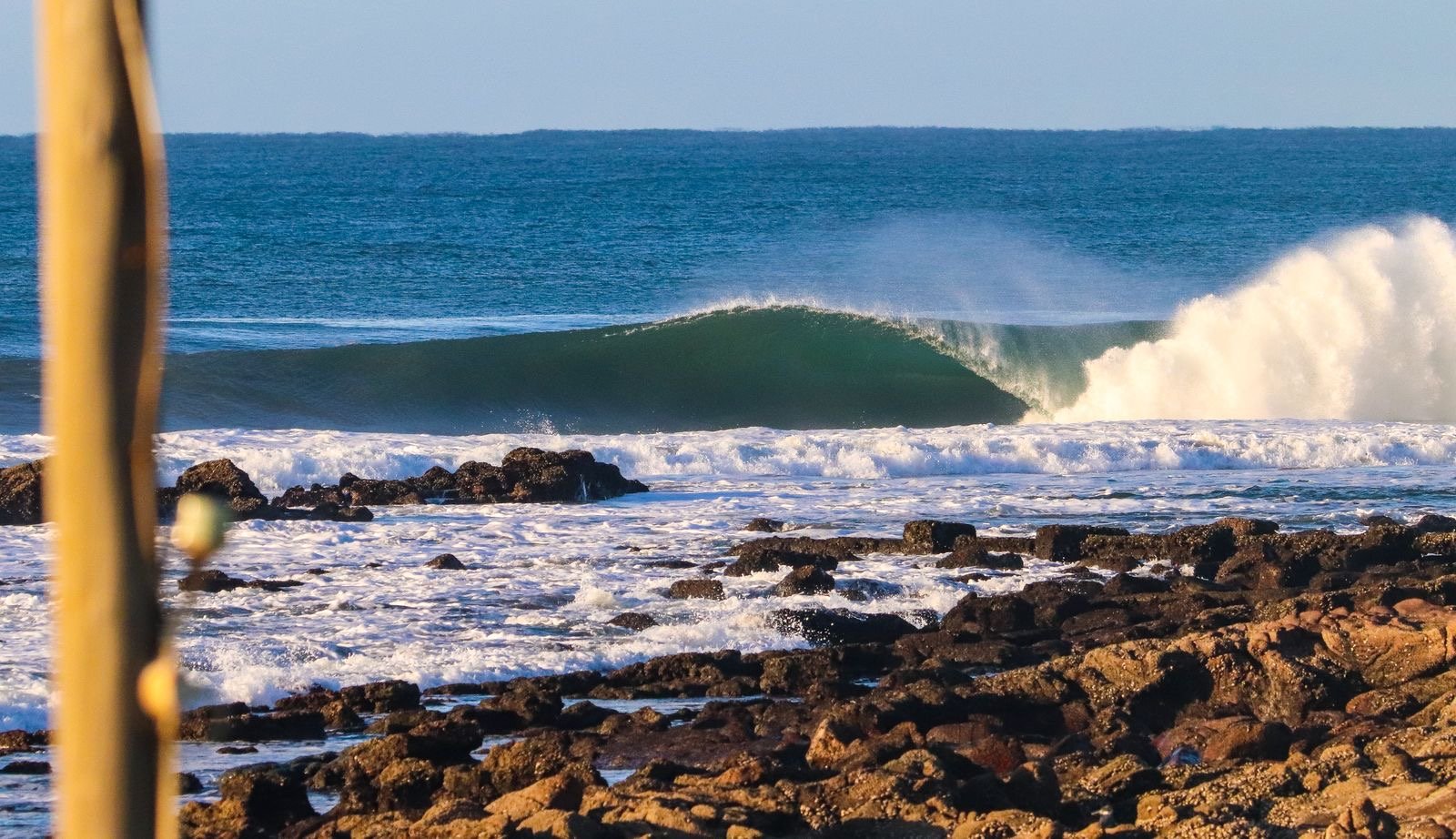
The Southern Ocean generates storm systems that bring waves to the Coast. Prevailing south-westerly winds around forty degrees south, nicknamed the roaring forties, blow around the globe with almost nothing to stop them, and swell from those storms propagates across the entire Indian Ocean. When one of those storms is strong and well placed, it arrives on the KZN coastline as a long-period southwest groundswell. Long period means energy, creating lines that wrap cleanly around headlands, which is exactly what our point breaks need.
The second source is slightly closer. In the warmer months, from November to March, tropical systems form over the warm waters of the Mozambique Channel and east of Madagascar. These systems generate large and direct easterly swell, bringing the beaches of Durban to life and giving surfers the opportunity to chase left-handers in a land of rights.
Two directions, two seasons, and a coast with a shoreline that can catch both.
Seasons
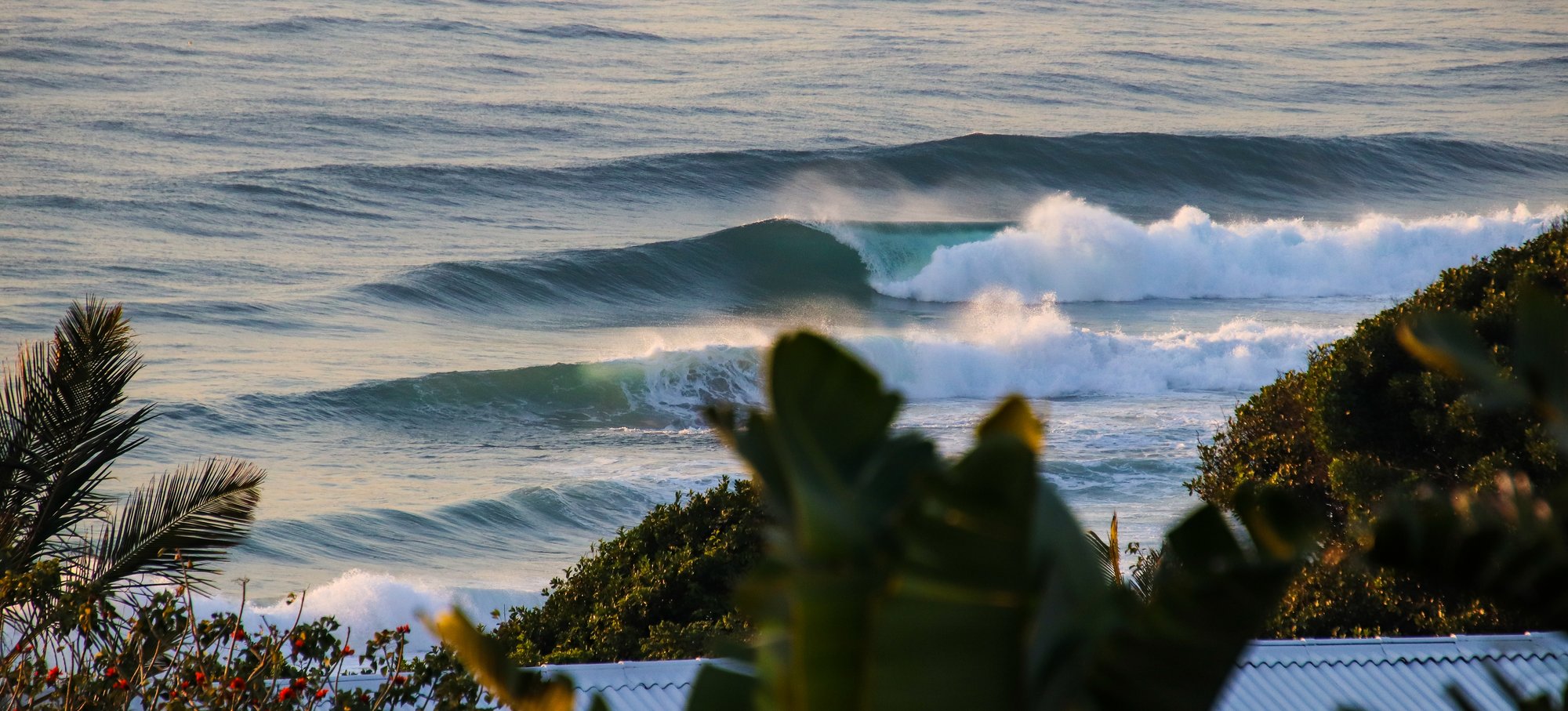
Winter is the best time to surf here, with groundswell and early-morning land breezes, while summer is smaller and less consistent, with the focus on cyclone swells.
In winter the high interior of South Africa cools rapidly overnight. That cold, heavy air drains downhill towards the warmer ocean, and many mornings start with a strong offshore breeze that grooms the faces.
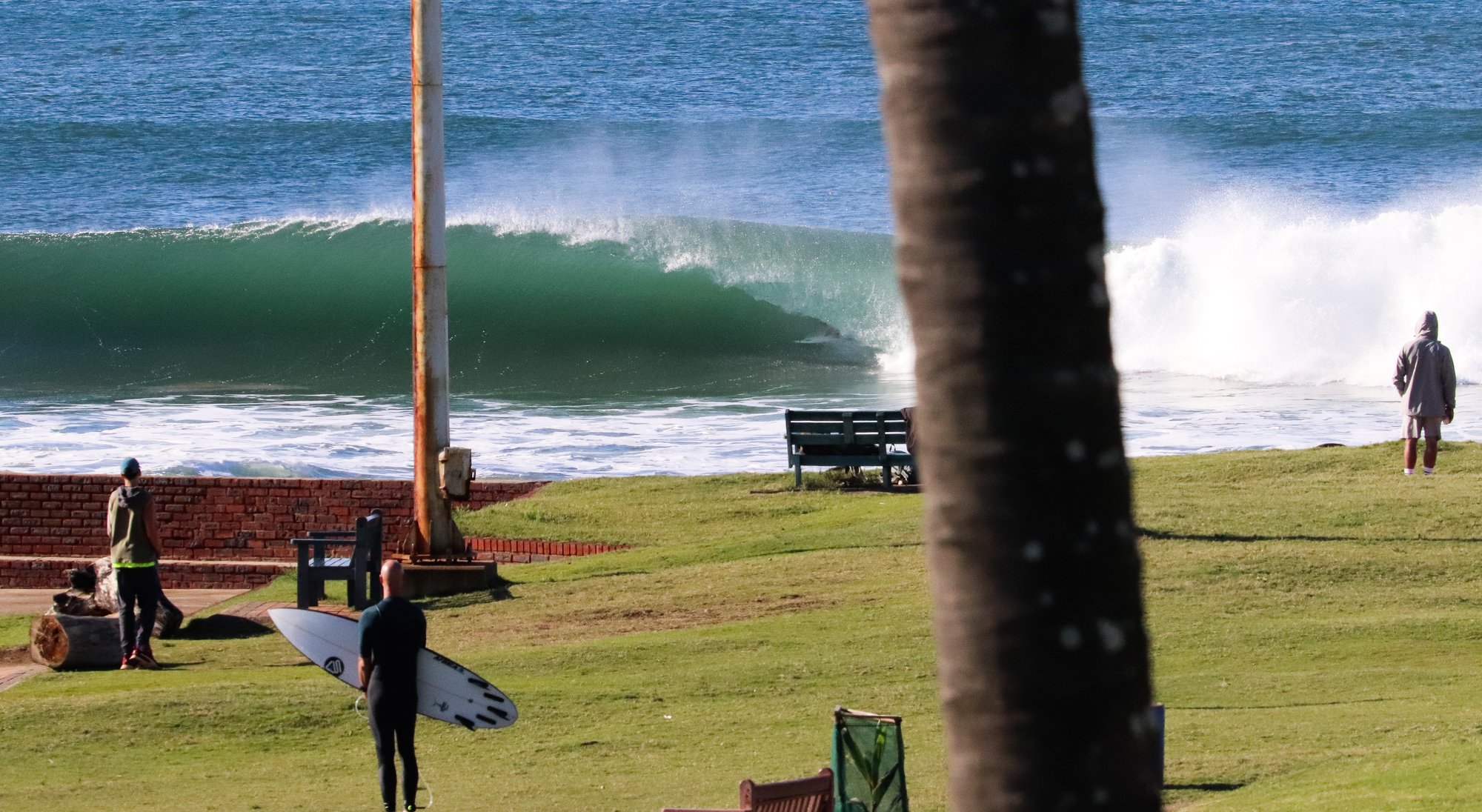
In summer, warm water temperatures and even warmer air temperatures, coupled with clean water and medium-sized swell, combine to create a user-friendly playground. The fun boards come out along with the board shorts. This vibe can quickly change as cyclones track towards Durban, anything bigger than head-high at New Pier or North Beach packs a punch at least twice its size.
Warm water from the tropics
The Agulhas Current pushes water of 24 to 26 degrees from the tropical Indian Ocean along our coastline. It is the largest western boundary current on earth, moving an estimated 70 million cubic metres of water a second, about twice the Gulf Stream. It runs along the edge of the continental shelf, so its warmth is never far from the beach. The sea peaks at 25 to 27 degrees around early February and bottoms out at 19 to 22 in early August. A rash vest and board shorts will do in summer, and a 2 mm long-sleeve shorty or a 3/2 spring suit is enough on a windy day in the coldest month. Compare that to the cold-water reputation of most of the world's famous waves, and the appeal of a winter trip here is obvious.
The shape of the sea floor
Along South Africa's east coast the continental shelf is uniformly narrow, with one exception, the Natal Bight, a widening of about 160 kilometres between Cape St Lucia and Durban that reaches around 50 kilometres across near the Tugela River mouth. The shelf edge sits at roughly the 200 metre line and drops steeply beyond it, and the Agulhas Current follows that edge.
In plain terms: a steep, narrow shelf means swell arrives from deep water with little to slow it, then stands up quickly over the inshore banks. A wider, shallower shelf spreads and smooths the energy. KwaZulu-Natal has both, which is one reason the character of the waves changes as you move up and down the coast.
Sand, sandstone and basalt
Take a point break apart and you need three things: a headland to hold the sand, a steady supply of sand, and a wave climate that moves sand along the shore. This is the recipe for the sand-bottom points of northern New South Wales and south-east Queensland, Australia, where big rivers deliver sediment straight to the coast and the dominant swell drives it along the beach by longshore drift until it piles up behind a headland as a long, triangular bank.
KwaZulu-Natal has the same ingredients: rivers rising in the Drakensberg, tough headlands and a dominant southerly swell pushing sand north. That is why so many of its best waves are sand-bottom rights rather than a few famous reefs, and why a single storm or flood can rearrange a bank overnight.
It's not all sand. Most of the points on the coast break over scattered rock to varying degrees, and Cave Rock on the Bluff is a legitimate reef break with a notorious reputation and a dedicated local crew.
The variety on this coastline is remarkable, the crowds are thin and the waves are world class.
A climate that built a lifestyle
Durban's climate is humid subtropical, with hot, humid summers and mild, dry, frost-free winters. It gets about 2,365 hours of sunshine and roughly a metre of rain a year, most of it in summer thunderstorms, with June and July under 60 millimetres a month and a winter average temperature near 17 degrees. That climate is why this coast lives outdoors. Beachfront promenades, surf schools, lifesaving clubs, running and cycling routes and hiking trails are part of daily life. The South Coast alone has a run of five Blue Flag beaches, well-kept campsites and caravan parks, and a hiking route from beach to beach. Surf sits at the centre of it. The country's first national surfing championships were held in Durban in 1966, and the area has long been a hub for making surfboards and surf gear for the local market and for export.
A surf trip that is easy to do
The best waves in the world are often the hardest to get to. Here the opposite is true. King Shaka International Airport sits just about in the middle of a stretch of coastline more accessible than most. The coast is divided into three clear zones, Durban, the North Coast and the South Coast, each within easy reach of the others. Surf trips elsewhere in the world often mean a boat and a camp. Here you can surf a point at dawn, eat breakfast in a beach town before a second session and wash the day down with a craft beer at the local market in the afternoon.
The rest of the trip is part of the draw. Durban's food culture grew out of its large Indian community, a cultural experience in itself and fuel for your sessions. The coast has incredible natural beauty, and the famous Game Reserves of Zululand are within a day's drive. Compared with Jeffreys Bay, which gets the headlines and is regularly ranked among the best waves on the planet, KwaZulu-Natal is rarely the first name on a surfer's list. We think that is a gap. Caught between preserving the low level of crowds in this zone and exposing the incredible waves we have to offer, East Coast Collective is walking a fine line, introducing foreign surfers to the most authentic South African surf experiences.
What this means for our clients
Surfing is one of the four strands of what we do, and it is the one where local knowledge makes the biggest difference. A surf trip on this coast is planned day by day around the swell and wind forecast. We read the charts, choose the break that matches each guest's ability, and handle the logistics around it: where to stay, how to get there and what to do when the ocean goes flat. Our founder is a professional waterman who cut his teeth on this stretch of Coastline, and his local knowledge gives our clients the freedom to focus on the experience.